Craftsmanship
Seven steps, none of which can be hurried
There is no eighth step where a machine takes over. This is the whole of it.
01
Drawing
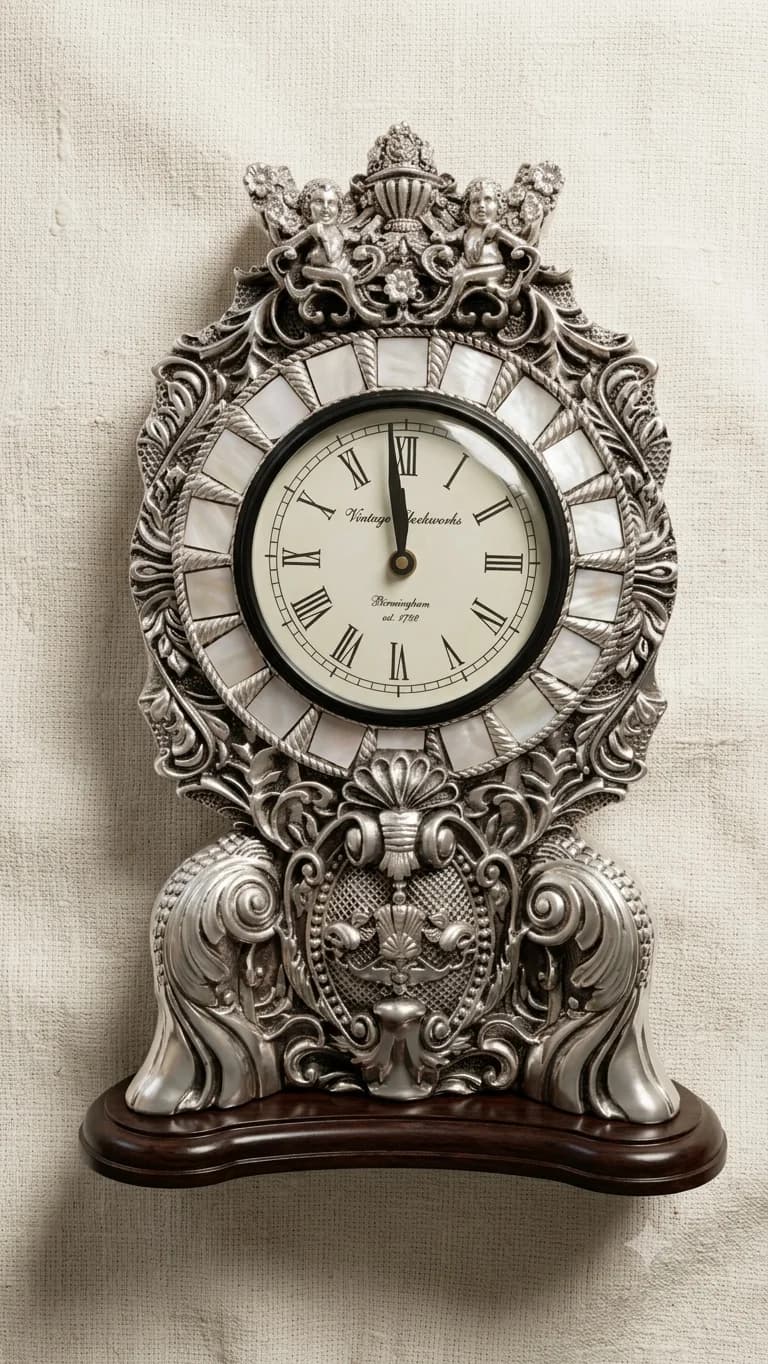
Every piece begins on paper. Our designers work from Rajput and Mughal reference — a jharokha arch, a temple frieze — before a single sheet of silver is cut.
02
Raising
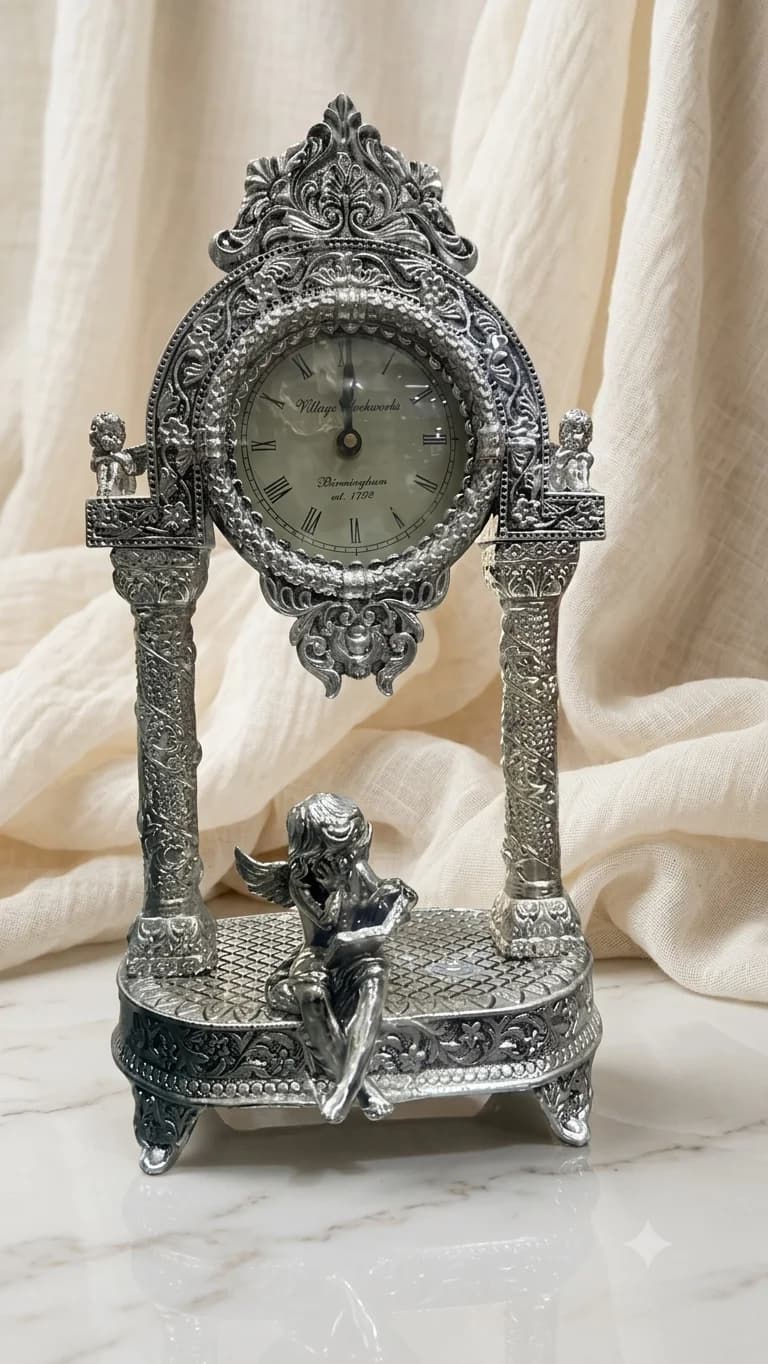
Flat sheet becomes form under the hammer. A clock case takes upwards of two thousand strikes, worked over a pitch bowl until the body holds its shape.
03
Chasing
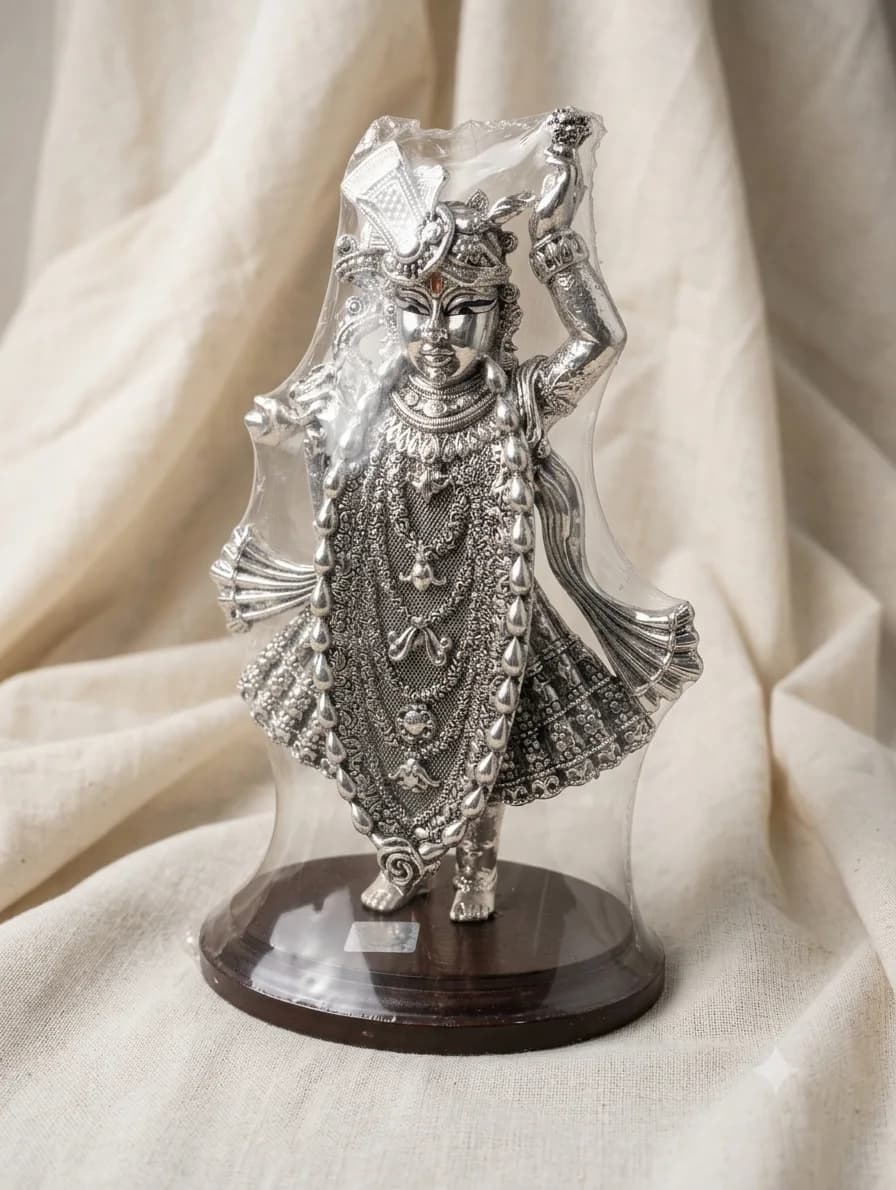
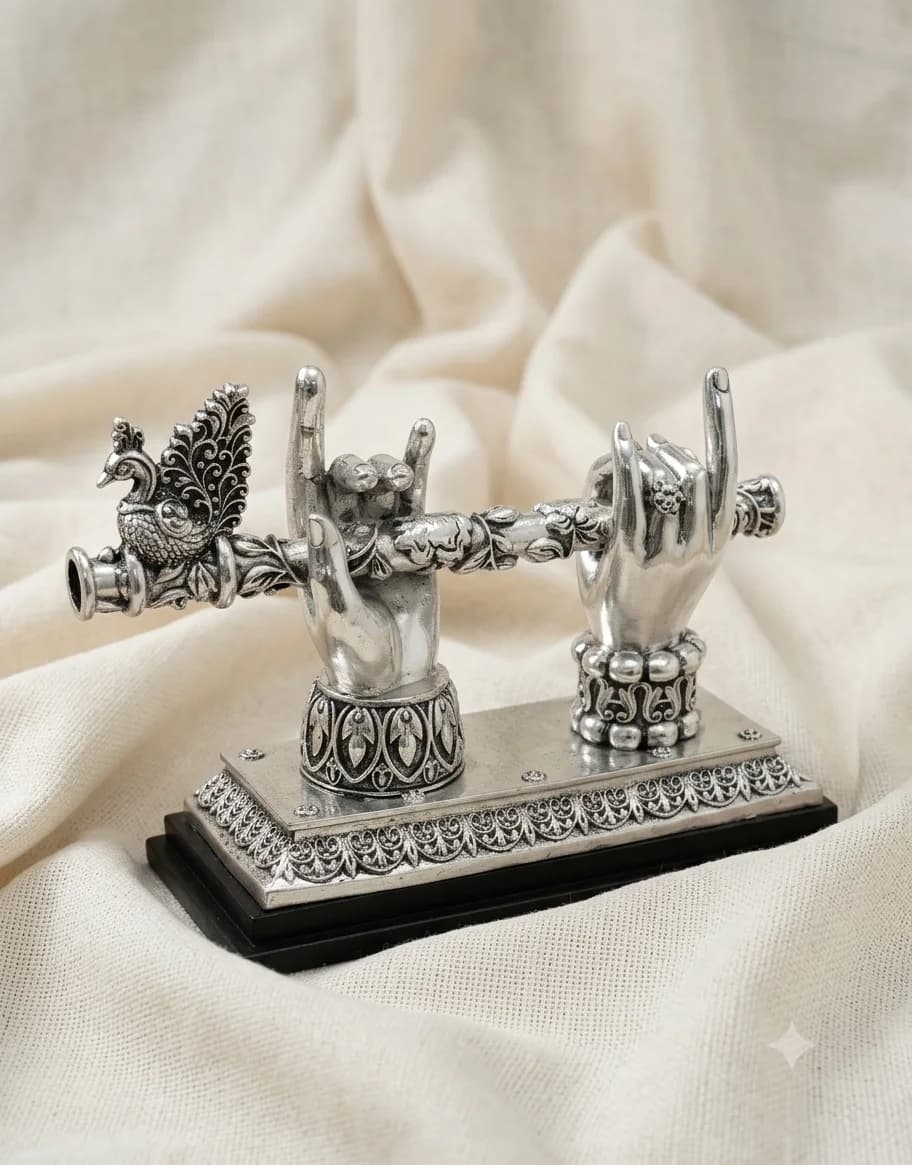
The detail goes in from the front with punches ground by the silversmith himself. This is the step that cannot be rushed and cannot be machined.
04
Repoussé
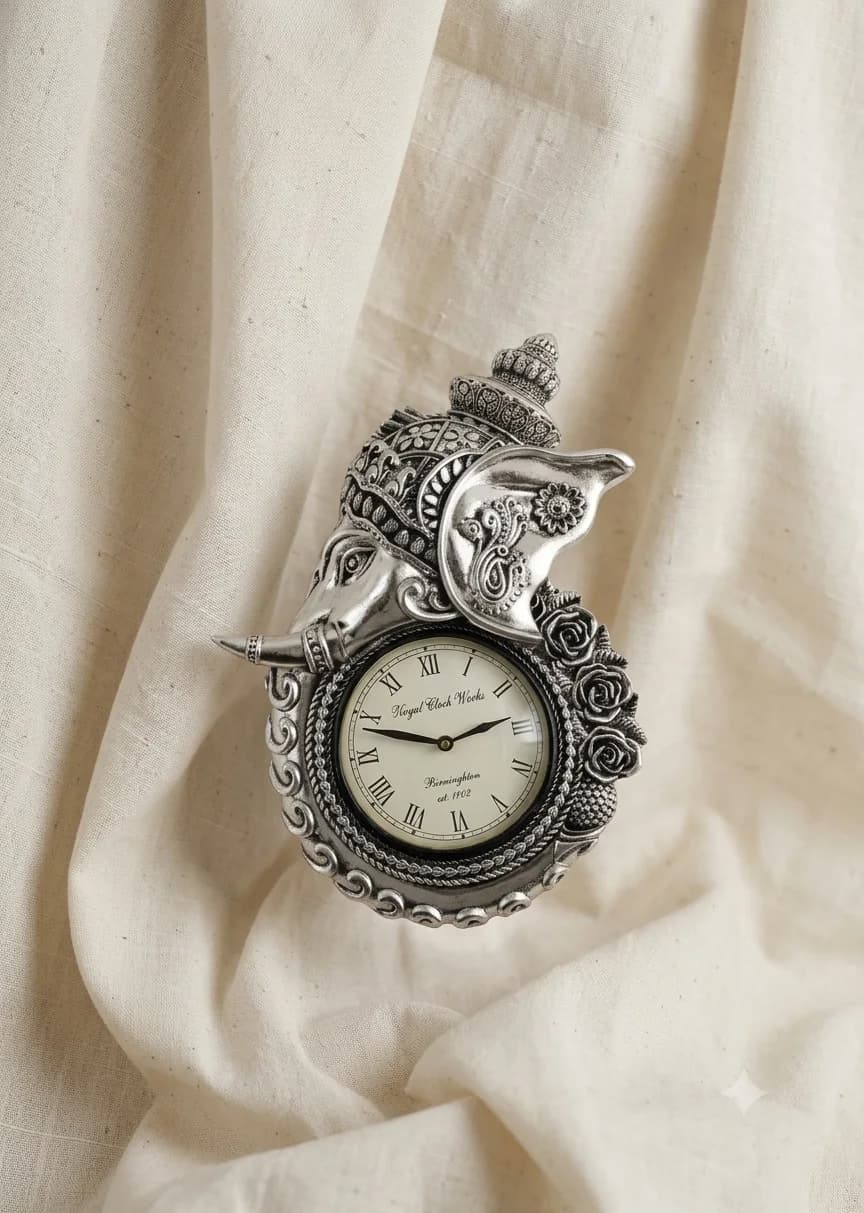
Relief is pushed out from behind, then refined from the front again. The two steps alternate until the depth reads correctly under a lamp.
05
Assembly
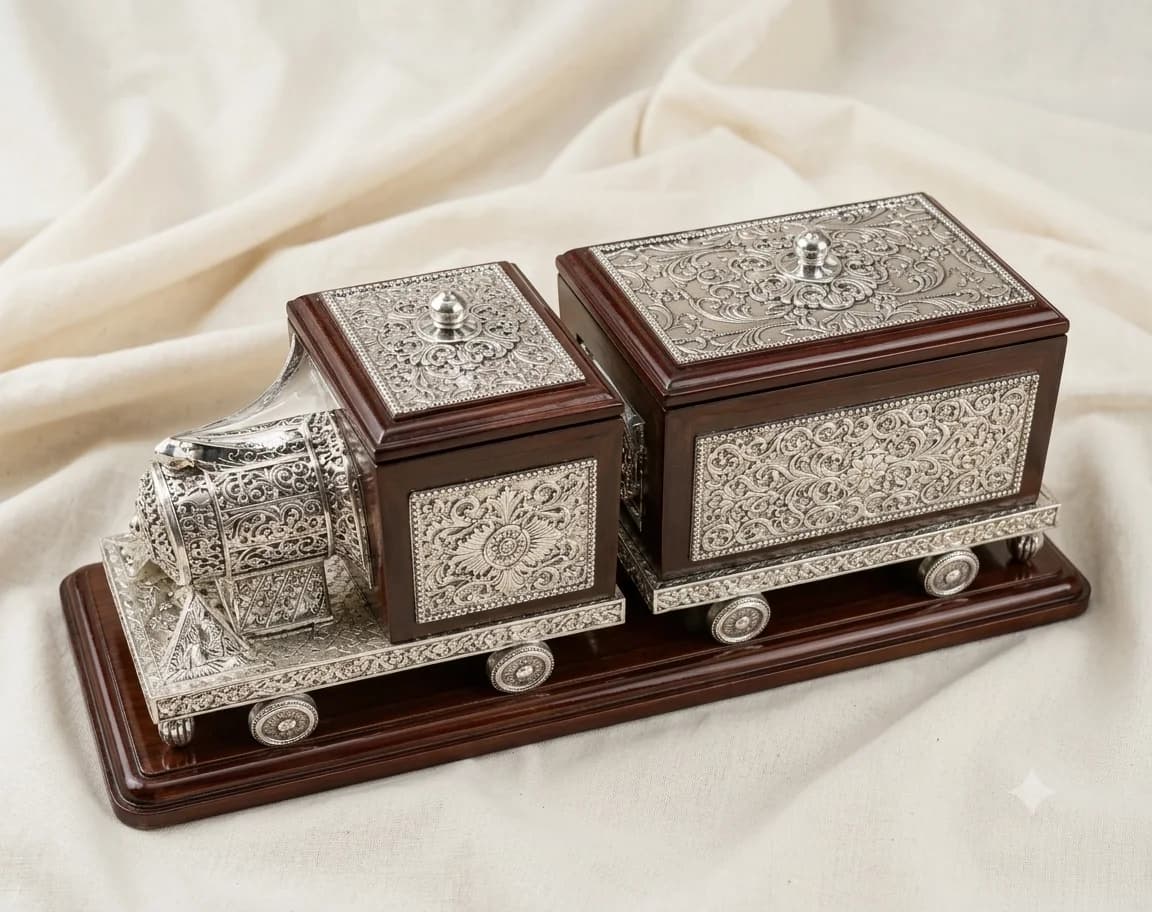
Components are soldered, movements seated, hardwood bases turned and fitted. Nothing is glued that can be pinned.
06
Finishing
Oxidised in the recesses, burnished on the high points. The contrast is what makes chased silver legible from across a room.
07
Hallmarking
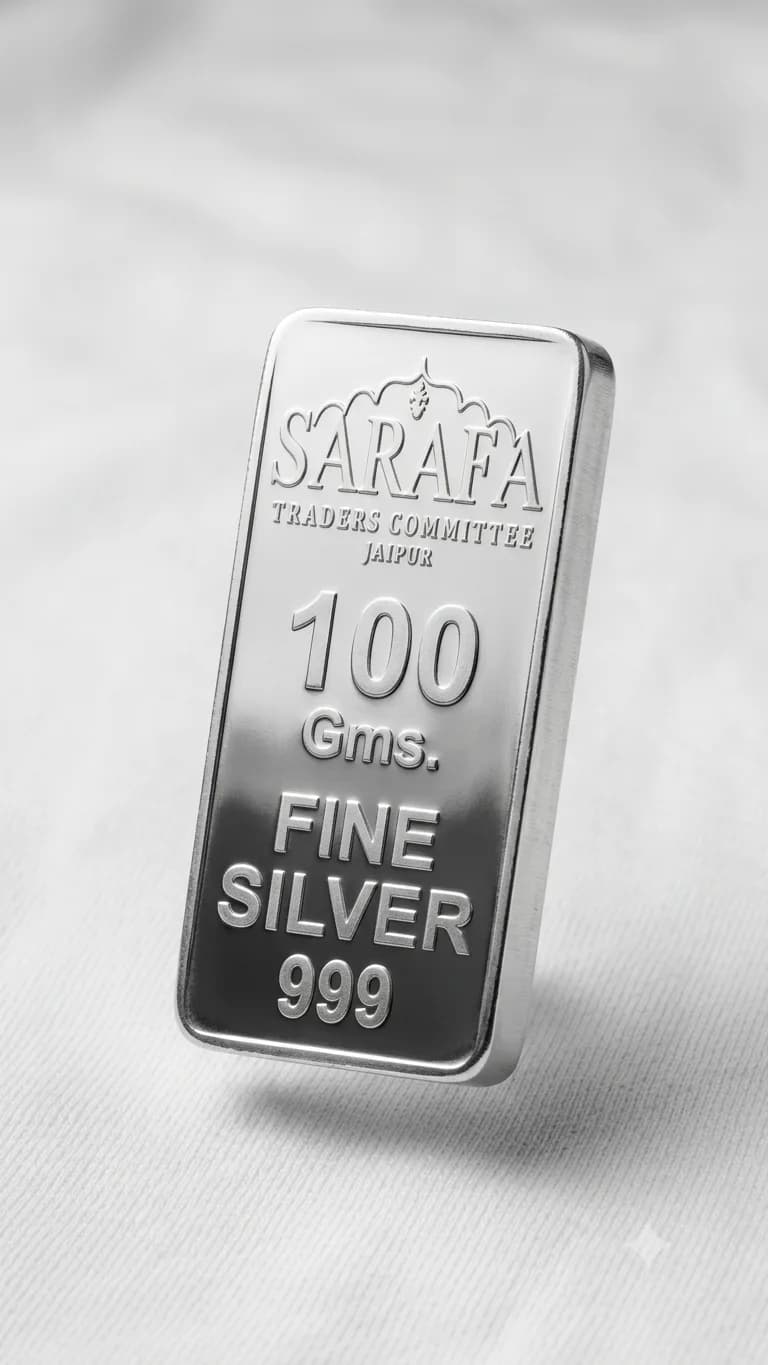
Purity is assayed and struck. Bullion carries the Sarafa Traders Committee mark; articles are stamped 925 and issued a certificate.
On hallmarking
What the Sarafa mark actually certifies
The Sarafa Traders Committee is Jaipur's own assay authority and has certified purity for this market for generations. A struck mark means the metal was tested, not merely described. Our bullion carries it because our own trade will not buy without it; our articles are stamped 925 and issued a certificate naming the piece and its weight.