Care
Caring for Indian Silver in a Damp Climate
· 5 min read
Tarnish is chemistry, not damage. What actually causes it in London and Toronto winters, and the ten-minute routine that reverses it.
Tarnish is not damage and it is not a defect. It is silver sulphide, formed when silver meets sulphur compounds in the air, and it is completely reversible. Understanding that changes how you deal with it.
What accelerates it is humidity, sulphur and contact. Damp coastal air in Sydney, gas central heating in London, wool drawer liners, rubber bands, newspaper, and — surprisingly often — the foam in cheap display cases. Direct sunlight through a window will darken a piece unevenly, which looks worse than uniform tarnish and is harder to correct.
The routine takes ten minutes. Wipe along the grain with the cotton cloth supplied, working the high points and leaving the recesses alone. If a piece has gone properly dark, a warm bath of mild soap and water, dried immediately and completely, will lift most of it before you touch a cloth.
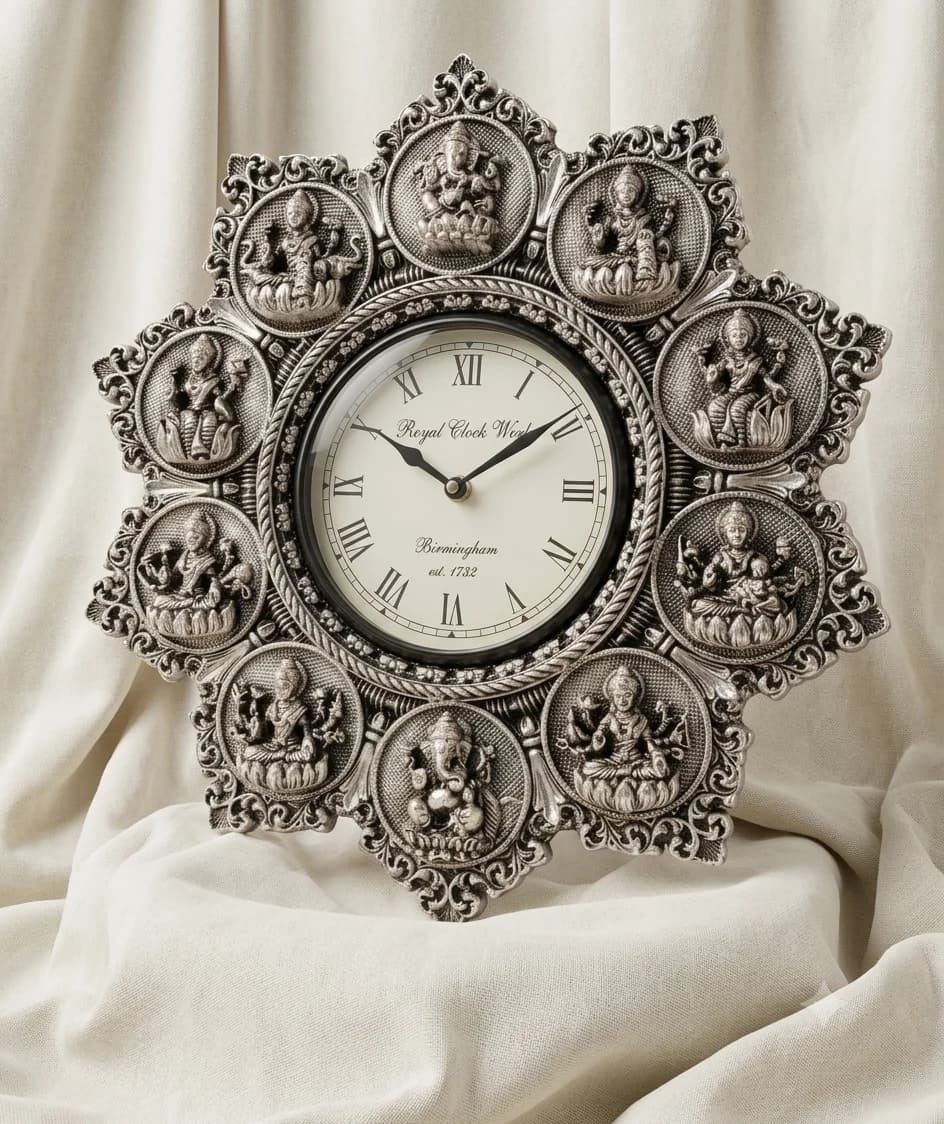
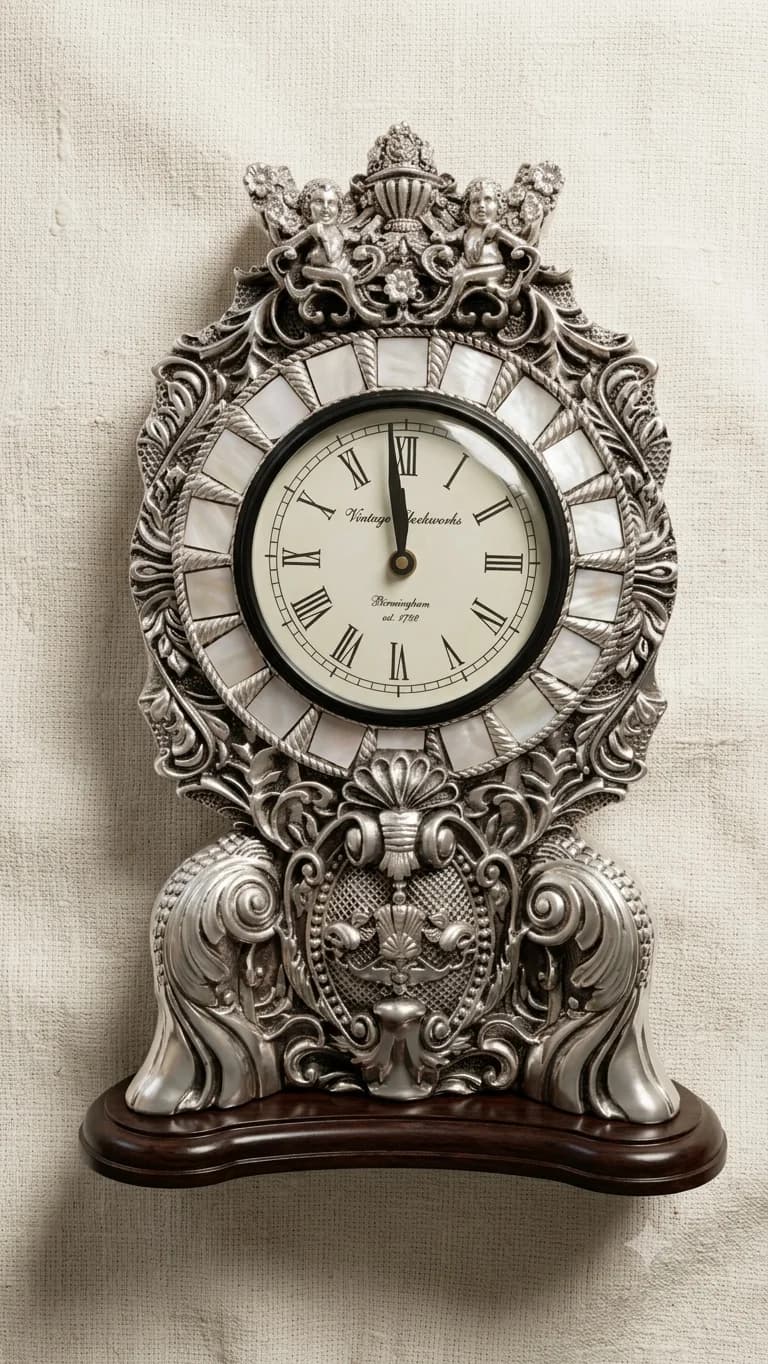
What not to do: do not reach for a liquid dip or a proprietary polish on chased work. Those strip the deliberate oxidation from the recesses, and that oxidation is the entire reason the detail reads from across a room. A clock case that has been dipped looks flat and slightly dead, and restoring it means re-oxidising by hand.
For storage, use anti-tarnish strips in a closed cabinet, or the cotton bag the piece arrived in. Not plastic — trapped moisture is worse than open air.
Questions about a piece?
Message the workshop and someone who has held it will reply, usually the same day.