Tradition
Choosing an Idol for a Home Temple
· 7 min read
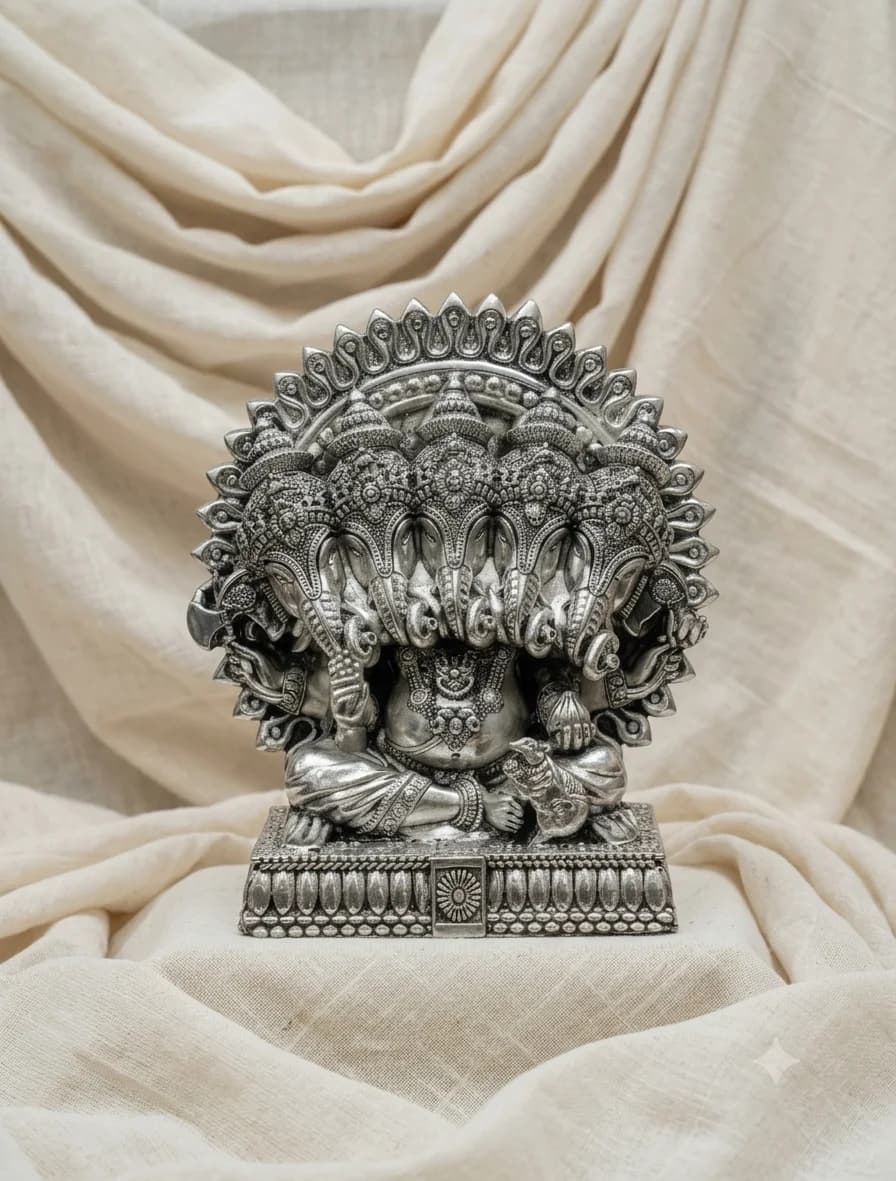
Height, direction, material and metal — the conventions that actually matter when you are setting up a mandir far from home.
Setting up a mandir in a house your parents have never seen raises questions nobody prepared you for. Most of the conventions are simpler than they sound, and a few of them genuinely matter.
On height: the traditional guidance is that an idol for a home temple should not exceed about nine inches. The reasoning is practical rather than mystical — larger murtis carry ritual obligations of daily service that a household shrine is not set up to meet. Most of what we make sits between five and seven inches for exactly this reason.
On direction: the shrine faces east or north where the room allows it, with the worshipper facing the opposite way. If your floor plan will not permit it, place it where it will actually be used. A shrine in the correct corner that nobody visits serves no one.
On metal: silver is traditional for household deities, and it is what most families ask us for. It is also, practically, the metal that survives being handled daily. Brass is heavier and cheaper; silver takes fine detail far better, which is why the expression on a face is legible on a silver murti and approximate on a cast brass one.
On number: single idols of a deity, not pairs of the same figure. Ganesh is placed to the left of the entrance to the shrine. Beyond that, families differ, regions differ, and anyone who tells you there is one correct answer is overstating the case.
If you are unsure, message us and describe the room. We have set up more of these at a distance than we can count, and we will tell you what we would do.
Questions about a piece?
Message the workshop and someone who has held it will reply, usually the same day.