Craft
Chasing and Repoussé, Explained at the Bench
· 8 min read
Two words used interchangeably by people who have never used a punch. They are opposites, and the difference is why a clock case takes eleven days.
The two words are used interchangeably by people who have never held a punch. They are opposites, and the difference explains why a clock case takes eleven days rather than one.
Repoussé is worked from behind. The silversmith supports the sheet on pitch — a warm, tarry compound that yields under pressure and holds its shape — and pushes the metal outward, raising the broad forms of the design in relief. It is where volume comes from.
Chasing is worked from the front. The piece is turned over, reset in the pitch, and the silversmith drives detail inward with punches: the vein of a leaf, the fold of a drape, the edge that separates one form from the next. It is where legibility comes from.
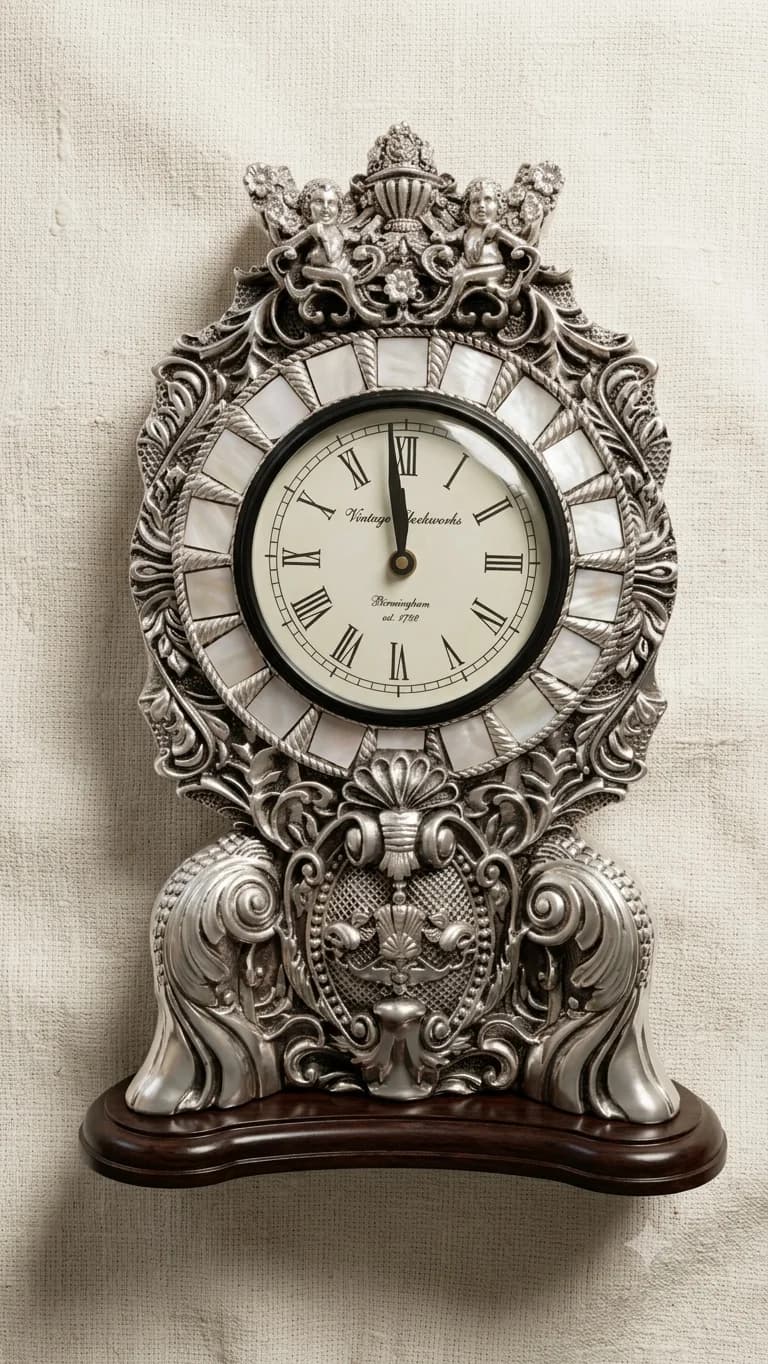
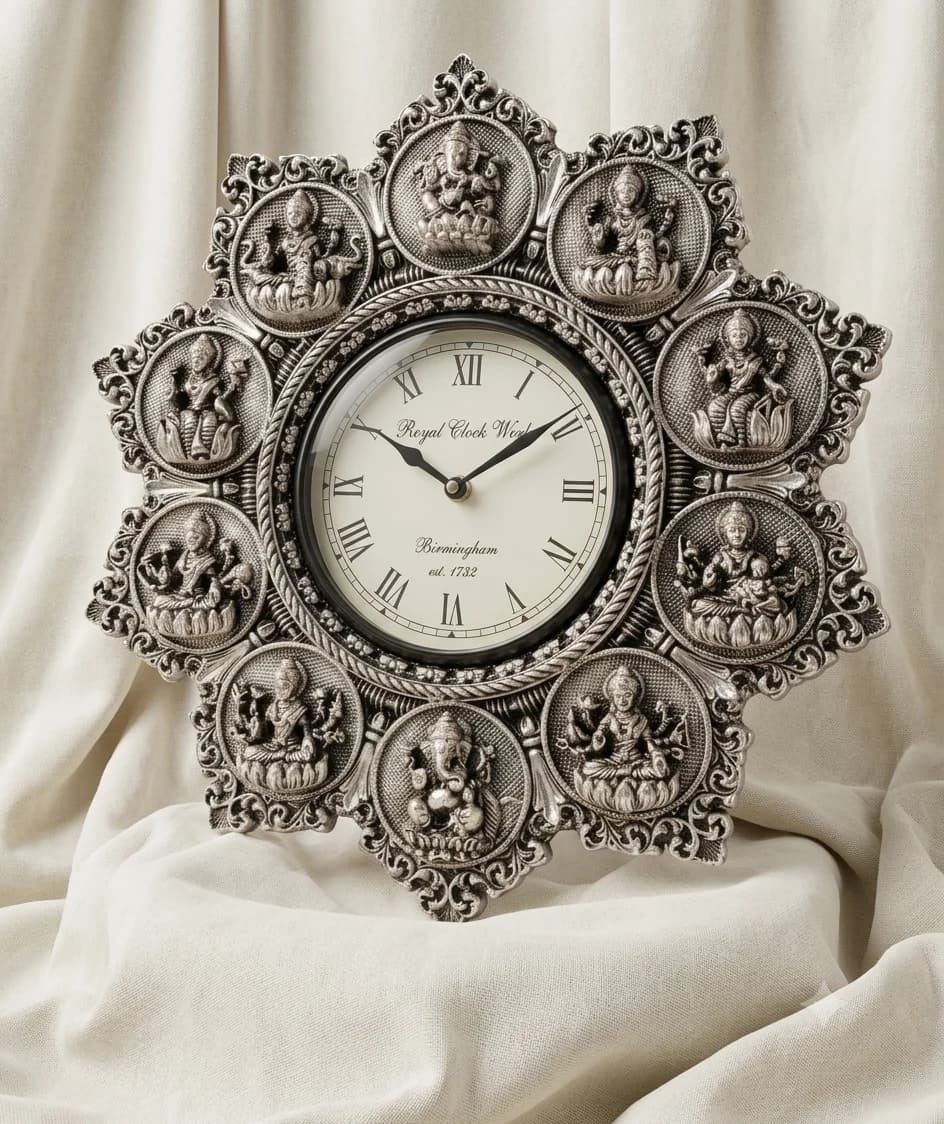
Neither is a single pass. The two alternate. Raise the form, turn the piece, define the edge, turn it back, push a little further where the light is not catching. On a deeply worked case this cycle repeats through the whole surface, and the pitch has to be melted out and reset each time. A silversmith working an Ashtalakshmi frame will reset the pitch a dozen times before the medallions read correctly under a lamp.
Every punch is ground by the person using it, on a stone, to a profile that exists nowhere else. This is why two workshops produce visibly different work from the same drawing, and why a cast reproduction — which copies the surface but not the sequence — never quite looks right. The depth is not there because the depth was never hammered in.
Questions about a piece?
Message the workshop and someone who has held it will reply, usually the same day.