Buying Guide
How to Tell Real Silver from Silver-Plate
· 6 min read
Four checks you can run at home — the magnet, the ice, the mark and the smell — and why the hallmark is the only one that settles it.
There are four tests people repeat online, and three of them are close to useless on their own. It is worth knowing which is which before you spend money on a piece you cannot inspect in person.
The magnet test is the one worth running first. Silver is not magnetic. If a magnet clings firmly, you are holding plated steel or nickel. A very faint drag proves nothing either way — some silver alloys and many wooden-based pieces contain small ferrous fittings — but a firm grab is decisive, and it costs you nothing.
The ice test works because silver has the highest thermal conductivity of any metal. Set an ice cube on the piece and one on a coin of known base metal. The cube on silver will visibly melt faster. This is genuinely reliable on solid silver and genuinely misleading on silver over hardwood, which is most decorative work, ours included.
The smell test is folklore that happens to be true. Rub the piece hard with your thumb. Real silver is odourless; copper-heavy alloys leave a distinct metallic smell on your skin. It tells you something about the alloy but nothing about the percentage.
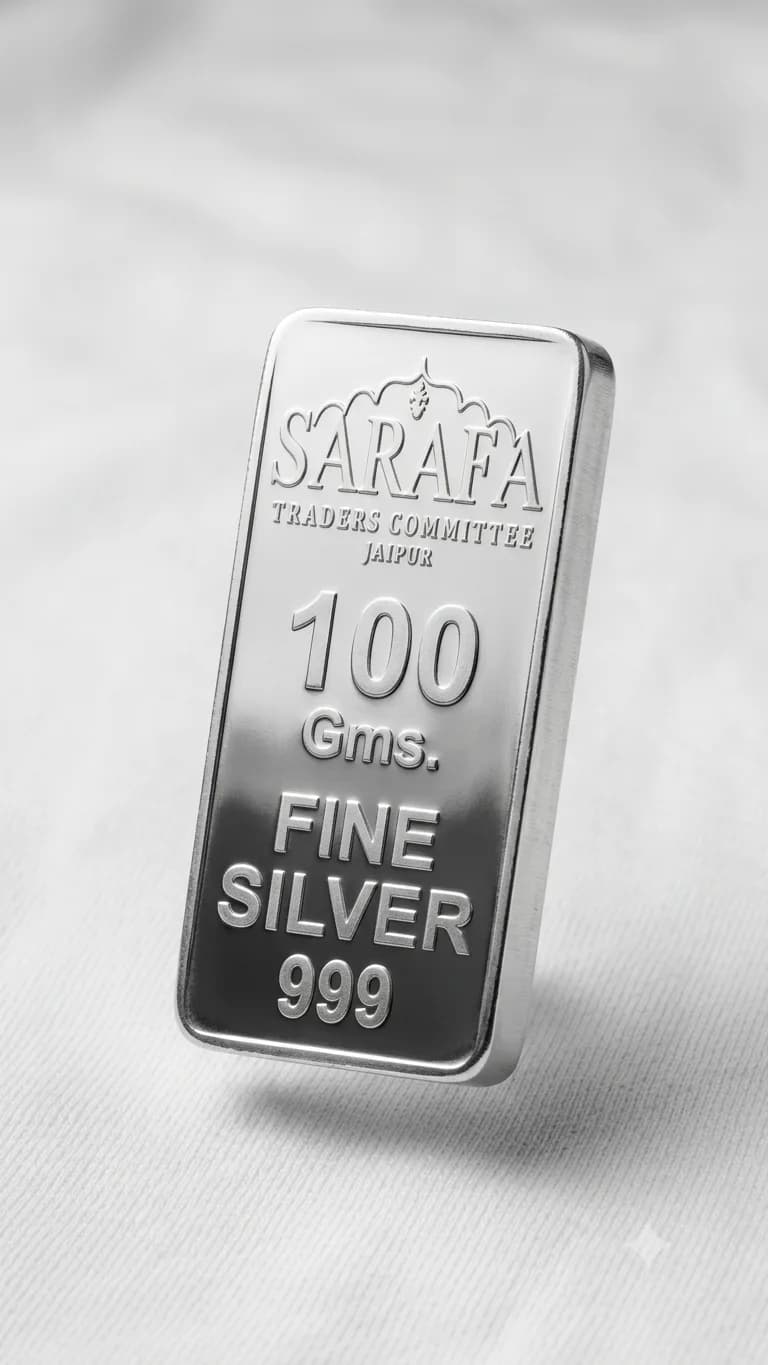
Which leaves the mark, and the mark is the only one that settles anything. A struck hallmark means the metal was assayed — physically tested by an authority that stakes its name on the number. In Jaipur that authority is the Sarafa Traders Committee, and it is the mark the local trade buys against, which is a stronger endorsement than any consumer-facing claim. Look for 925 on sterling articles and 999 on fine bullion, and ask for the certificate. Any seller who cannot produce one is telling you something.
Questions about a piece?
Message the workshop and someone who has held it will reply, usually the same day.